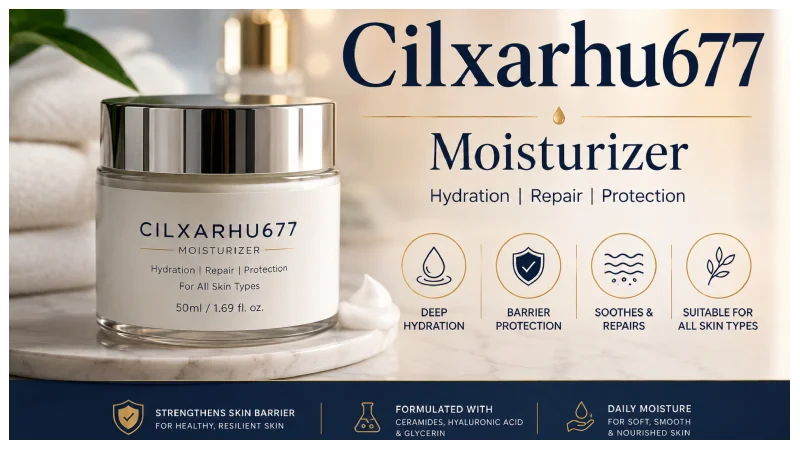
The first time “Cilxarhu677 moisturizer” showed up in my search results, I genuinely thought it was a typo. Turns out it isn’t. It’s just… a name that gives you nothing to hold onto. No brand story, no packaging you’d recognize on a shelf, nothing. And that’s usually where most people give up and close the tab.
If you didn’t give up — here’s what’s actually worth knowing before you buy it.
Quick note before we start: nothing here is medical advice. This is general skincare information based on how barrier moisturizers typically work — for anything involving a diagnosed skin condition, prescription actives, or a reaction that isn’t settling down, talk to an actual dermatologist.
Why This Product Is So Hard to Research?
Products with code-style names like this one rarely come from a big retail brand. Names like Cilxarhu677 tend to belong to something smaller — a private-label formula a clinic sells, or a batch a small lab puts out without much fanfare.
That doesn’t mean it’s fake. It just means the usual shortcuts don’t work here. No CosDNA listing, no skincare YouTuber swatching it on camera. Whatever you learn about this product, you’re learning it from the listing in front of you — so it’s worth actually reading instead of scrolling past.
What It’s Supposed to Actually Do
Take the branding out of the picture, and most hydrating moisturizers are doing the same three jobs: pulling water into the skin, softening rough patches, and slowing down how quickly that moisture leaves again.
If Cilxarhu677 moisturizer has the usual lineup — hyaluronic acid, glycerin, ceramides — it’s following the same playbook as any dermatologist-approved barrier cream. Nothing exotic there. These are cheap, boring, well-studied ingredients that show up whether you’re paying $8 or $90.
Which means the ingredients themselves aren’t really in question. What’s actually unclear is whether this specific bottle has enough of them to do anything.
For context: ceramides alone make up roughly half the lipid content that holds skin cells together, which is why dermatologists consistently point to them — alongside humectants like hyaluronic acid and glycerin — as the backbone of any barrier-repair formula, regardless of brand.
Check the Label First
I can’t tell you with certainty what’s in this jar, and honestly, neither can anyone writing about it online without the packaging in hand. Before buying, look for:
- A full ingredient list — not a vague “key actives” summary
- A batch code and expiration date somewhere on the container
- Product photos that match across different sellers
- A seller who’ll actually tell you who manufactures it
Miss all four of those, and that tells you more than the product description ever will.
Who This Might Actually Suit
Barrier-focused moisturizers like this one tend to work best if you’re dealing with skin that feels tight after washing, redness from over-exfoliating, or dryness that gets worse the second the weather turns cold.
If you lean oily, go easy — heavier formulas can feel like too much and cause congestion. Try it on your jaw for a couple of days before committing your whole face.
How to Actually Use It
Nothing complicated here.
Mornings — cleanse, add a serum if that’s part of your thing, apply the moisturizer to slightly damp skin, then sunscreen on top.
Nights — cleanse properly, apply any treatment products first, moisturizer last.
Don’t expect results by tomorrow. Skin usually feels softer within a week or so, but real barrier repair — the kind that actually holds — takes weeks of showing up for it, not days.
What It Should Cost
Since this isn’t stocked at Target or Sephora, prices bounce around depending on who’s selling it. A legitimate 50ml jar generally lands somewhere between $35 and $85. If you see it going for under $20 anywhere, that’s not a deal — that’s a red flag. Proper formulation and packaging just don’t come that cheap.
What Could Go Wrong
Moisturizers are low-risk as a category, but not risk-free:
- Mild stinging, usually on skin that’s already compromised or freshly exfoliated
- Breakouts in people sensitive to rich formulas — this one tends to show up gradually, over a couple of weeks, not right away
- A red, itchy rash from fragrance or preservatives, which is different from just being dry
Doesn’t clear up in 48 hours? Stop using it and go back to something simple and minimal until your skin settles. If a reaction is severe — swelling, blistering, spreading rash — that’s a “see a doctor” situation, not a “wait it out” one.
Buying It Safely
Here’s the honest take: the formula probably isn’t the risky part — the supply chain is. Obscure product names are an easy target for counterfeit sellers, mostly because buyers have nothing to compare a fake against.
If you can find the actual manufacturer or a retailer you trust, buy from there. If the only listing you can find is a random third party with no ingredient photos, wait — or grab something better documented instead.
Quick Questions
Is it safe?
Probably, for most people. The real risk isn’t the moisturizer category — it’s not knowing what’s in your specific jar. Patch test first, and skip it if your skin’s currently broken or irritated.
What about oily or acne-prone skin?
Could go either way. Start light, use less than feels natural, and give it a couple weeks before writing it off.
Can it be layered with retinol or vitamin C?
Yes, generally. Actives go on first, let them absorb, moisturizer goes on top.
Bottom Line
I wouldn’t call Cilxarhu677 moisturizer a scam. I also wouldn’t call it a safe bet without doing a little homework first. Read the actual label. Make sure the seller isn’t dodging basic questions. Patch test before you go all in. And let your skin — not whatever’s written on the listing — be the thing that decides if it stays in your routine.
This article is based on publicly available product descriptions and general dermatological principles about how barrier moisturizers function — not on independent lab testing of this specific product, since no such testing is publicly available. Treat product-specific claims accordingly, and verify ingredients directly from the packaging before purchase.